
YABLOKO: APPLE OF DISCORD, 1993–2026
A companion article to the GhostMesh VPN video on Yabloko's 33-year history, from its 1993 founding to the 2026 election, plus expert forecasts on the economy and a possible new mobilization.
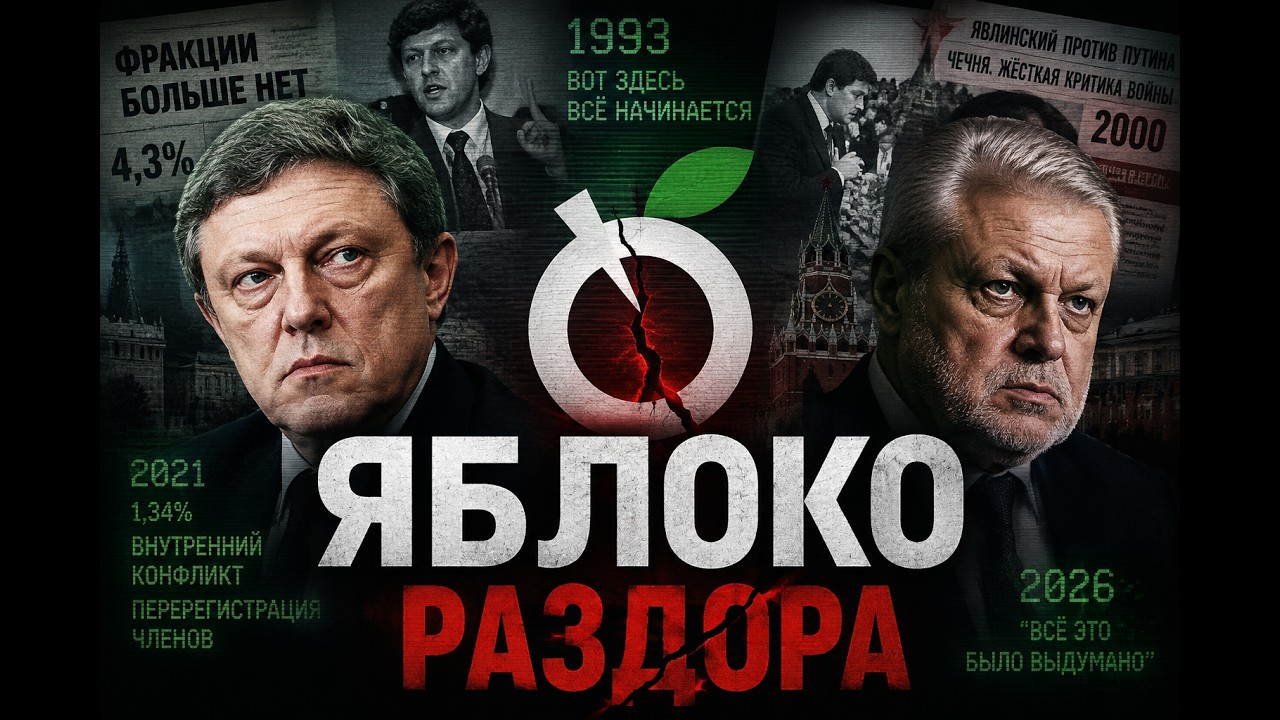
YouTube may be unavailable or load unreliably in Russia. The preview is hosted on this site, so the article remains readable without connecting to YouTube.
Watch on YouTube ↗The episode in brief
The new GhostMesh episode traces the history of the Yabloko party, from the Yavlinsky-Boldyrev-Lukin bloc formed in 1993 to its current fight to stay on the ballot for the 2026 election. It follows the party through parliamentary campaigns and internal conflicts.
The episode also covers economic forecasts: the state of the budget, the risk of a new mobilization wave, a slowing economy, and the labor market. These forecasts and expert opinions are clearly separated from confirmed data and official statistics.
33 years of Yabloko: from the 1993 bloc to losing its Duma seats
Yabloko was formed in 1993 as a bloc led by Grigory Yavlinsky, Yuri Boldyrev, and Vladimir Lukin, quickly becoming one of the notable democratic forces in the State Duma. The party's popularity peaked in the 1990s, including Yavlinsky's presidential campaigns.
In the early 2000s the party clashed with the Union of Right Forces, and in 2003 it lost its Duma faction. Yabloko went on to run in the 2007–2021 elections but never regained parliamentary representation.
The 2026 election and the removal of the federal list
Yabloko's 2026 platform centered on the theme of peace, and according to the video, the campaign was accompanied by pressure on individual party members. The key event was the removal of the party's federal list from the ballot after a lawsuit filed by the Rodina movement.
At the time the video was published, the party had appealed that decision. The outcome remains open and is treated in the episode as one of the factors shaping the party's future on the political stage.
Economic forecast: scenarios, not facts
The second half of the video covers expert forecasts on the state of the budget, the risk of a new mobilization wave, a slowing economy, and the labor market. It also touches on the risk of continued pressure on civil society.
The narrator stresses that these are expert assessments and opinions valid at the time of publication, not confirmed facts. The episode deliberately separates such forecasts from official statistics so viewers can judge for themselves how likely each scenario is.
Topics in the video
- 00:00Yabloko's removal from the ballot and the party's reaction
- 01:1033 years in politics: the party's stance and conflict with the authorities
- 03:40On humanity, sincerity, and an alternative to "Putin's team"
- 06:10Yavlinsky on Ukraine, language, and risks for the country
- 09:00How Yabloko was created and its peak in the '90s
- 12:00Yavlinsky's presidential campaigns
- 14:50Chechnya, the failed merger with the Union of Right Forces, and leaving the Duma (2003)
- 19:402007–2021 elections: the party does not return
- 21:20The 2026 platform: 43 words about peace, pressure on members
- 24:00The 2026 campaign: Rodina's lawsuit and the appeal
- 26:30Economic forecast: budget, mobilization, stagnation
- 29:20A grey zone: neither growth nor collapse — what's next?
The main takeaway
Yabloko's history shows how one of Russia's oldest democratic parties keeps trying to balance holding onto its principles with the fight to stay on the ballot at all. The economic forecasts in this episode are scenarios based on information available at publication time, not a guaranteed outcome — what actually happens will depend on many factors, including economic and political dynamics.